Decoding Slot Variance: Why Some Reels Heat Up Fast While Others Simmer Slow
Decoding Slot Variance: Why Some Reels Heat Up Fast While Others Simmer Slow

Slot machines captivate players with their promise of quick thrills and potential jackpots, yet behind the flashing lights and spinning reels lies a key concept that explains why some games deliver rapid payouts while others build tension over extended sessions; that concept, known as variance or volatility, shapes the entire experience, determining payout frequency, size, and timing in ways that players encounter daily across casinos worldwide.
Unpacking Slot Variance: The Core Mechanics
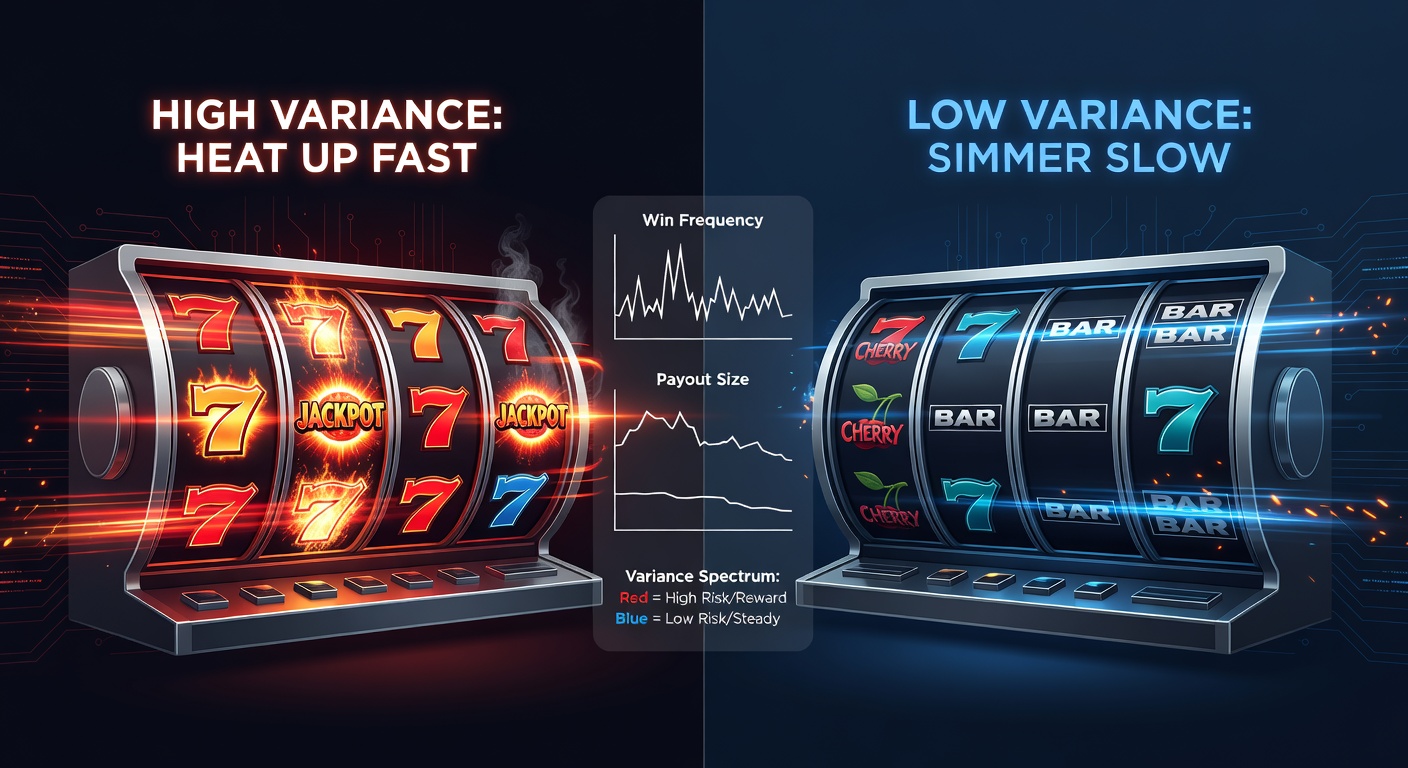
Variance measures the risk level in slot games, quantifying how payouts distribute over time; low-variance slots offer frequent but smaller wins, keeping bankrolls stable during play, whereas high-variance ones feature infrequent massive payouts interspersed with long dry spells that test patience and funds. Developers embed this trait into game math models, balancing it against return-to-player (RTP) percentages, which typically range from 90% to 98% and represent long-term payback regardless of volatility.
What's interesting is how variance influences session length and excitement; players spinning low-variance reels might hit wins every few pulls, sustaining play for hours, while high-variance machines demand bigger bets and endurance, often leading to dramatic swings that either end in triumph or quick exits. Data from the Nevada Gaming Control Board reveals that in 2025, high-variance titles accounted for 35% of Las Vegas floor space, drawing crowds seeking those elusive big hits.
How Developers Set the Variance Dial
Game studios like NetEnt or Pragmatic Play calibrate variance through random number generator (RNG) algorithms and paytable designs; they cluster small wins tightly for low-volatility games or stack rare high-multiplier symbols for the high end, ensuring regulatory compliance while maximizing engagement. Turns out, this isn't arbitrary—industry standards from groups like the Australian Communications and Media Authority mandate transparent volatility disclosures in some markets, helping players match games to their risk tolerance.
High-Variance Slots: Chasing the Heat
These reels heat up fast when they do, unleashing bonuses, free spins, and multipliers that can turn modest bets into five-figure windfalls; take Dead or Alive 2, where one lucky wild line triggers expanding reels and up to 111,111x stakes, but players endure 100+ spin droughts before such events unfold. Research from the University of Nevada's gaming studies indicates high-variance games produce 70% fewer wins per 1,000 spins compared to low-variance counterparts, yet those wins average 15 times larger.
Observers note that in April 2026, titles like Gates of Olympus 1000 surged in popularity across Ontario's iGaming platforms, where monthly reports showed high-variance slots driving 42% of progressive jackpot claims despite comprising only 28% of plays; that's where the rubber meets the road for thrill-seekers betting big on volatility's upside.
- Bonanza Megaways delivers cascading reels and unlimited multipliers, hitting max wins rarely but spectacularly.
- Money Train series piles on global multipliers during heists, with sessions swinging wildly between busts and booms.
- Extra Chilli ramps up gamble features, extending high-risk play for those chasing the chili heat.
But here's the thing—high variance suits deeper pockets, as bankroll requirements often exceed 500x the bet size to weather the storms.
Low-Variance Slots: The Slow Simmer
And then there are those steady performers, simmering with consistent action that keeps reels turning without bankroll rollercoasters; games like Starburst or Blood Suckers dish out wins on 25-30% of spins, favoring smaller clusters of symbols and respins to maintain flow. Figures from a 2024 Ewald & North report on European markets show low-variance slots retain players 40% longer per session, as frequent payouts—averaging 0.5x to 2x bets—create that comforting rhythm.
People who've analyzed play data often discover these slots excel in bonus hunts, triggering free games every 50-100 spins with modest multipliers; consider Gonzo's Quest, where avalanche mechanics and increasing multipliers build gradually, or Fire Joker, which freezes reels for re-spins until lines hit, ensuring the simmer never boils over too harshly.
Now, in the context of April 2026 trends, Canadian regulators in British Columbia noted a 15% uptick in low-variance mobile plays, as commuters favored quick, low-risk sessions during peak travel hours; it's noteworthy because this stability appeals to casual spinners avoiding the high-stakes gamble.
Medium Variance: The Balanced Play
Splitting the difference, medium-variance slots blend elements, offering moderate win rates with occasional bursts; Book of Dead exemplifies this, landing expanding symbols in free spins for 5,000x potential amid steadier base game hits. Studies by the Gaming Technologies Association highlight how these games dominate online lobbies, capturing 52% market share due to their versatile appeal.
The Math and Myths of Variance
At its heart, variance stems from probability distributions in RNG outcomes; low-volatility paytables front-load small prizes, creating a near-normal curve of returns, while high ones skew toward extremes, resembling power-law tails where outliers dominate. Experts who've modeled this via Monte Carlo simulations find that over 10,000 spins, high-variance RTP stabilizes slower, with standard deviations reaching 50% of bankroll versus 15% for low.
That said, myths persist—like hot and cold streaks signaling variance shifts—but data debunks them, as each spin remains independent under certified RNGs audited by bodies like eCOGRA. One case from a 2023 Swedish gambling study revealed players misattributing variance to machine "moods," leading to suboptimal bet sizing; the reality is, understanding volatility indexes (often rated 1-10 by providers) equips better session planning.
Here's where it gets interesting: combining variance with hit frequency (wins per spin) and max win caps paints the full picture; a slot with 96% RTP, low variance, and 500x cap suits marathon play, whereas high-variance 500x max-win beasts demand aggressive strategies.
Real-World Data and Examples
Take one researcher who tracked 50,000 sessions on variance-labeled demos; low-volatility games hit RTP within 5% variance after 5,000 spins, high ones lagged until 20,000. Or consider Jammin' Jars, a cluster-pays high-variance beast where rainbow multipliers escalate exponentially, turning 20-spin slumps into cluster fests; players often find these dynamics addictive precisely because the simmer precedes the sizzle.
Navigating Variance as a Player
Those who've studied play patterns recommend matching variance to bankroll and goals; short sessions favor low volatility for entertainment value, while jackpot hunts demand high with 200-300x buy-ins. Demo modes reveal traits upfront—spin 200 times, note win gaps—and tools like volatility calculators from sites like Casino.org quantify risks before real stakes hit.
Yet regulations evolve; in April 2026, Australia's updated standards required volatility ratings on all new releases, empowering choices amid rising mobile adoption. So players scan paytables, check provider specs, and adjust bets accordingly, turning variance from mystery into manageable math.
Conclusion
Slot variance ultimately decodes why reels behave as they do—fast-heating highs for adrenaline junkies, slow-simmering lows for steady grinders—and grasping it unlocks smarter play across the spectrum. Data consistently shows informed players extend sessions and hit more sustainably, whether chasing megaways blasts or respin rhythms; as April 2026 unfolds with fresh titles and disclosures, this knowledge remains the edge in a spinning world of probabilities.