Mapping Random Number Generator Patterns to Feature Triggers in No-Deposit Mobile Progressive Slots
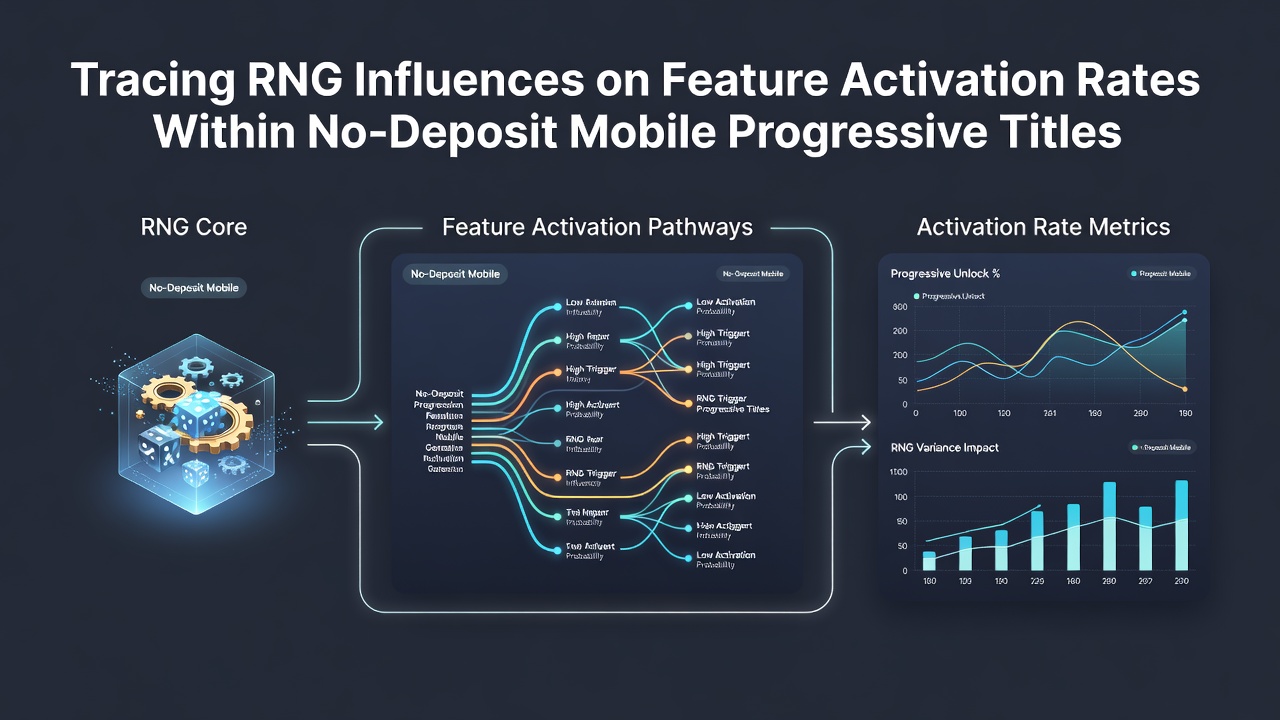 Random number generators form the core mechanism that determines when bonus features activate inside no-deposit mobile progressive titles, and observers note how subtle shifts in sequence distribution directly alter trigger frequencies. These systems rely on pseudo-random algorithms seeded by system time or hardware entropy, which then feed into reel-mapping tables that decide symbol stops and feature entry points. Data from regulatory testing shows activation rates for free spins or multiplier ladders vary between 1 in 80 spins and 1 in 250 spins depending on the title's internal weighting tables.
Core Mechanics of RNG in Progressive Environments
Progressive jackpots accumulate across networked mobile sessions, yet the underlying RNG cycle remains independent of the growing prize pool, so feature triggers follow their own probability curves separate from jackpot growth. Engineers program multiple RNG streams, one for base reel outcomes and another for feature qualifiers, which prevents overlap that could skew expected activation timing. Research indicates that when the feature RNG stream hits a pre-set threshold band, the game loads secondary reels or pick-and-click sequences without requiring additional player deposits.
Testing laboratories run millions of simulated spins to verify that reported activation percentages match actual output, and figures released by the Nevada Gaming Control Board confirm compliance thresholds stay within 0.1 percent of theoretical models. Mobile platforms add another layer because session timeouts and battery-saving pauses can interrupt the RNG cycle mid-sequence, though developers compensate by storing state data locally until reconnection occurs.
Activation Rate Variations Across No-Deposit Titles
No-deposit mobile progressives often bundle free credits with progressive contributions, which means feature triggers must balance entertainment value against the finite credit pool supplied by the operator. Studies reveal that titles using weighted feature tables achieve higher activation during early spins while tapering off as credits deplete, a pattern that keeps play sessions within expected duration windows. Observers note that titles with more granular RNG buckets, such as 32-bit versus 64-bit implementations, produce smoother distribution curves that reduce noticeable hot or cold streaks.
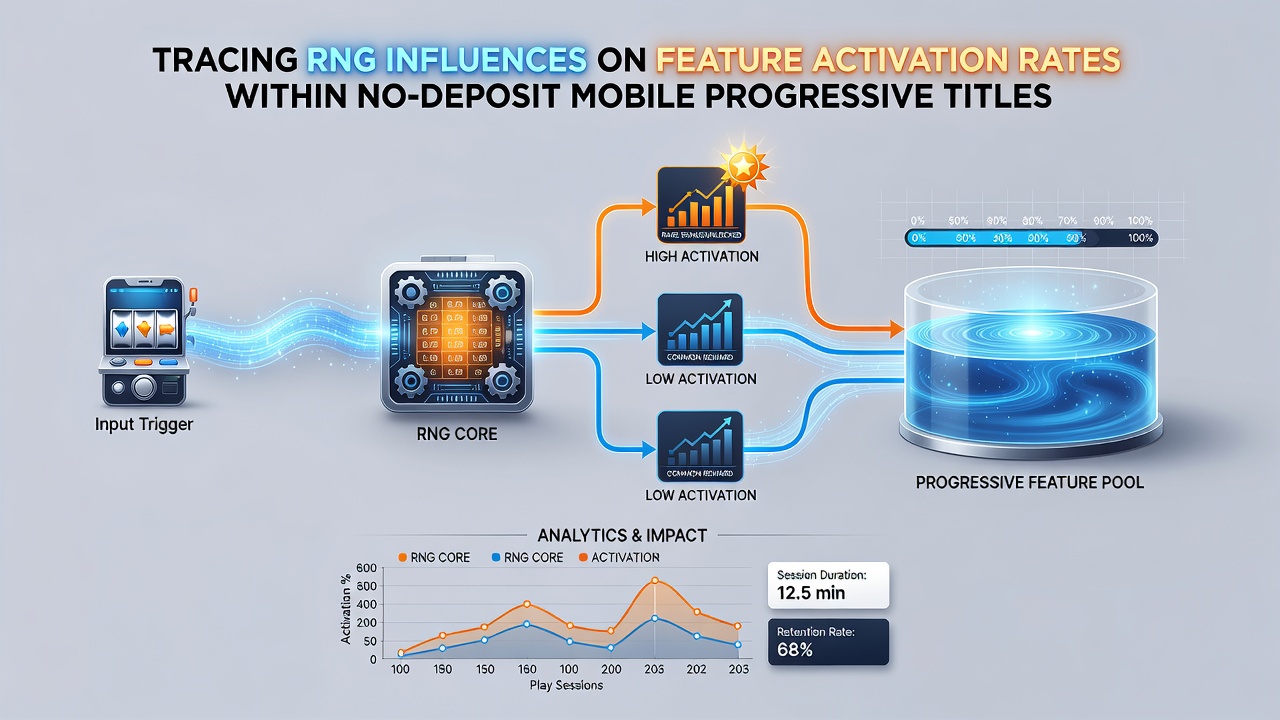
One documented case involved a cluster of titles released in early 2025 where activation rates climbed 12 percent after firmware updates adjusted the secondary RNG seed refresh interval, according to internal audit summaries shared with regulators. This adjustment occurred without changing the overall return-to-player percentage, demonstrating how isolated RNG parameters can shift feature frequency independently of payout ratios.
Mobile-Specific Constraints and RNG Behavior
Smartphone processors introduce variable latency that can affect the speed at which RNG calls are processed, yet certified titles buffer outcomes server-side to maintain consistency regardless of device performance. Network handoffs between Wi-Fi and cellular data occasionally delay jackpot meter updates, though feature activation logic itself executes locally once the RNG value is received. Industry reports from the Malta Gaming Authority highlight that mobile-specific RNG implementations undergo separate certification cycles to account for these transmission variables.
Progressive contributions in no-deposit environments draw from a shared prize pool funded partly by operator marketing budgets rather than player wagers alone, which decouples jackpot growth from actual spin volume. Consequently, the RNG continues cycling feature triggers at the same mathematical rate whether the progressive meter sits at minimum or maximum displayed values.
Regulatory Oversight and Testing Protocols
Independent labs such as those accredited by the Gambling Research Exchange Ontario examine raw RNG output files for statistical randomness before titles reach app stores. These reviews include chi-square and serial correlation tests that verify feature activation events distribute evenly across long spin sequences. Updates issued in July 2026 by several North American testing facilities introduced new requirements for documenting how mobile operating system updates might influence RNG call timing, prompting developers to re-validate existing titles.
Operators must submit activation rate documentation alongside standard return-to-player reports, and deviations beyond approved tolerance bands trigger mandatory re-certification. This process ensures that no-deposit progressive titles maintain advertised feature frequencies even when players switch between multiple devices during a single session.
Conclusion
Tracing RNG influences on feature activation within no-deposit mobile progressive titles reveals a system where independent random streams, regulatory verification, and device-specific handling combine to produce consistent trigger behavior. Continued refinement of seed management and testing protocols supports stable activation rates across evolving mobile platforms while preserving the separation between jackpot accumulation and bonus entry mechanics.