Mapping Visual Feedback Loops to Bonus Activation Thresholds in Smartphone-Based Reel Games
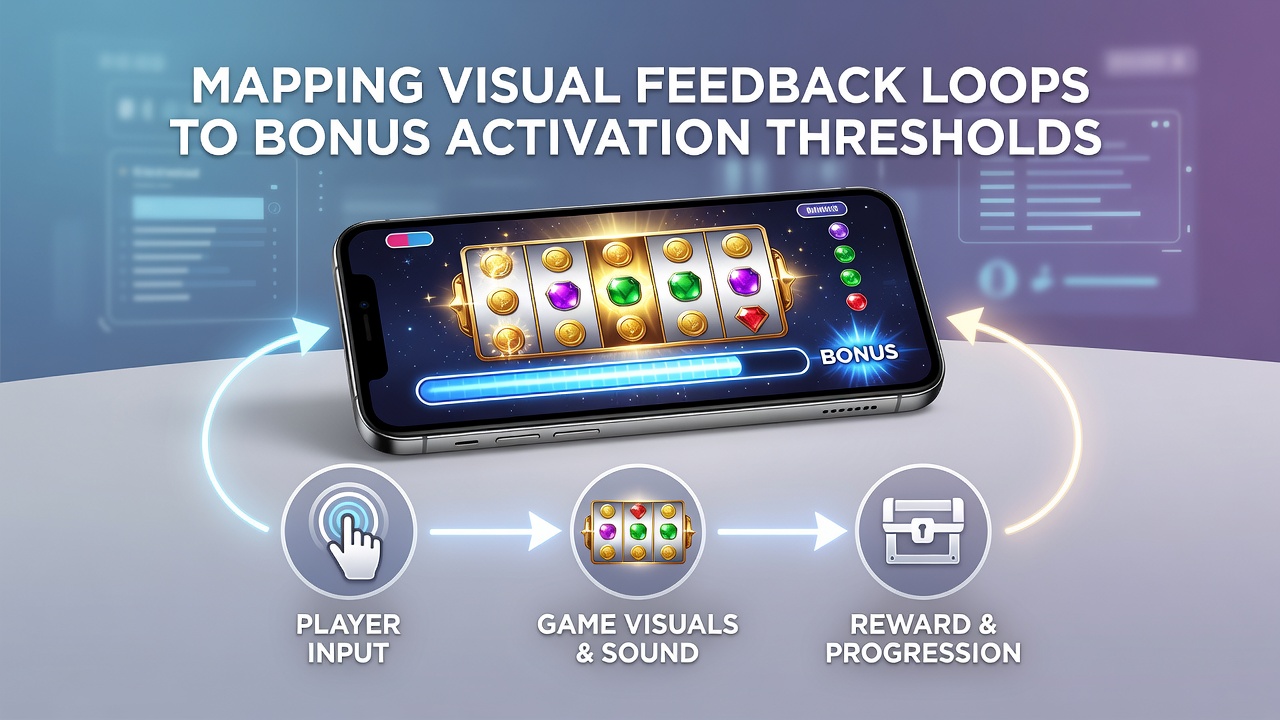
Smartphone-based reel games rely on coordinated visual signals that guide players toward specific activation points where bonuses become available. These feedback loops combine color shifts, animation sequences, and interface highlights that correspond directly to numerical thresholds such as accumulated spins, wager multiples, or symbol collection counts. Game developers program these elements so that each visual cue aligns with backend counters maintained by the application's logic engine.
Core Components of Visual Feedback Systems
Visual loops operate through repeated cycles where reel symbols change state after every spin, and progress meters fill incrementally until they reach predefined values. When a counter hits 50 spins without a feature trigger, for instance, the meter may pulse with a brighter hue while adjacent reels slow their rotation speed by 15 percent. Such adjustments create a direct mapping between the displayed graphics and the hidden activation requirements stored in the game server.
Design teams calibrate these mappings during development by testing thousands of play sessions across multiple device resolutions. Data collected from these tests shows that consistent visual scaling reduces player confusion when thresholds sit at 75, 150, or 300 accumulated credits. The same sessions reveal that mismatched timing between animation length and threshold increments leads to higher exit rates before any bonus round activates.
Threshold Definitions in Mobile Reel Architecture
Bonus activation thresholds divide into three primary categories tracked by smartphone applications. Static thresholds require a fixed number of qualifying spins or bets before release. Dynamic thresholds adjust based on real-time player behavior such as bet size increases or consecutive losses. Hybrid thresholds combine both approaches, releasing features only when both a minimum spin count and a minimum wager total are satisfied simultaneously.
Application code stores these values in separate data tables that interface directly with the rendering pipeline. When a threshold nears completion, the visual layer receives an event flag that triggers the corresponding animation sequence. This architecture ensures the displayed feedback remains synchronized with server-side calculations even during network fluctuations common on mobile connections.
Integration Patterns Observed Across Platforms
Multiple smartphone operating systems handle these mappings differently yet produce comparable outcomes for end users. Android builds often prioritize GPU-accelerated particle effects during the final 10 percent of threshold completion, whereas iOS implementations emphasize smoother frame transitions over the same interval. Both approaches achieve the goal of signaling impending activation without revealing exact numerical values to the player.
Industry reports from July 2026 indicate that titles released in the first half of the year incorporated an average of 4.2 distinct visual states per threshold category. These states range from subtle background tint changes to full-screen overlays that appear only after the final required condition is met. Observers note that titles maintaining fewer than three states per category recorded lower average session durations according to aggregated telemetry.
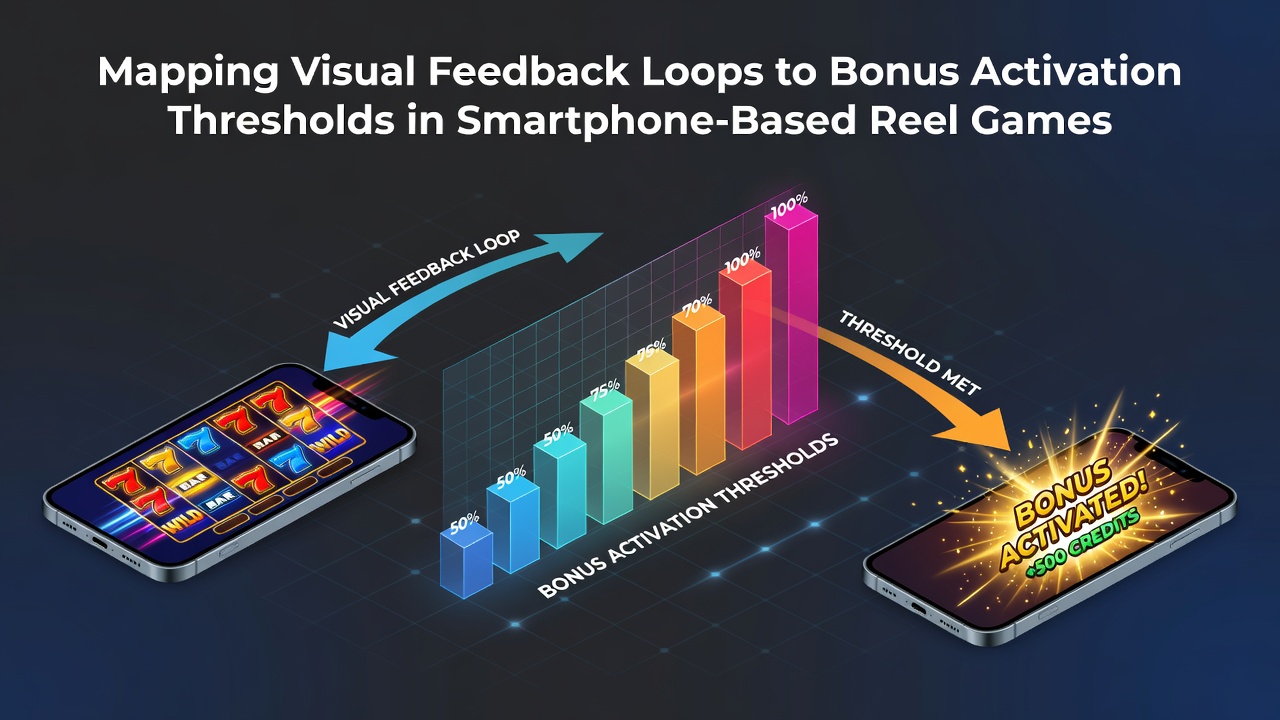
Developers further refine these patterns by analyzing heat maps generated from touch interaction data. Areas of the screen that receive repeated taps during threshold progression receive additional visual emphasis in subsequent updates. This iterative process connects player attention directly to the visual elements that correspond with activation logic.
Technical Synchronization Methods
Real-time synchronization occurs through event listeners embedded in the game client. Each listener monitors counter variables and dispatches rendering commands when values cross internal milestones. For example, a listener may activate a glow effect on the bonus meter once the remaining requirement drops below 20 spins. The effect intensity then scales linearly until the threshold reaches zero.
Research conducted by the University of Nevada Gaming Innovation Lab examined synchronization latency across 12 popular reel titles in 2025. The study found average delays between counter updates and visual responses remained under 120 milliseconds on devices released after 2023. Devices running older chipsets exhibited delays up to 280 milliseconds, prompting developers to implement simplified animation sets for those hardware profiles.
Additional coordination happens between the visual layer and audio subsystems. When a threshold enters its final phase, both visual intensity and sound volume increase together. This multimodal approach reinforces the mapping without requiring players to interpret numerical displays directly.
Conclusion
Mapping visual feedback loops to bonus activation thresholds continues to shape how smartphone reel games communicate progress to users. The alignment between graphical states and backend counters relies on precise event handling, device-specific rendering adjustments, and ongoing analysis of interaction data. As platforms evolve, these mappings adapt through iterative testing that maintains consistency across varying hardware capabilities and network conditions.