Reel Grid Sizes Shape Bonus Activation Rates in Mobile No-Deposit Slots

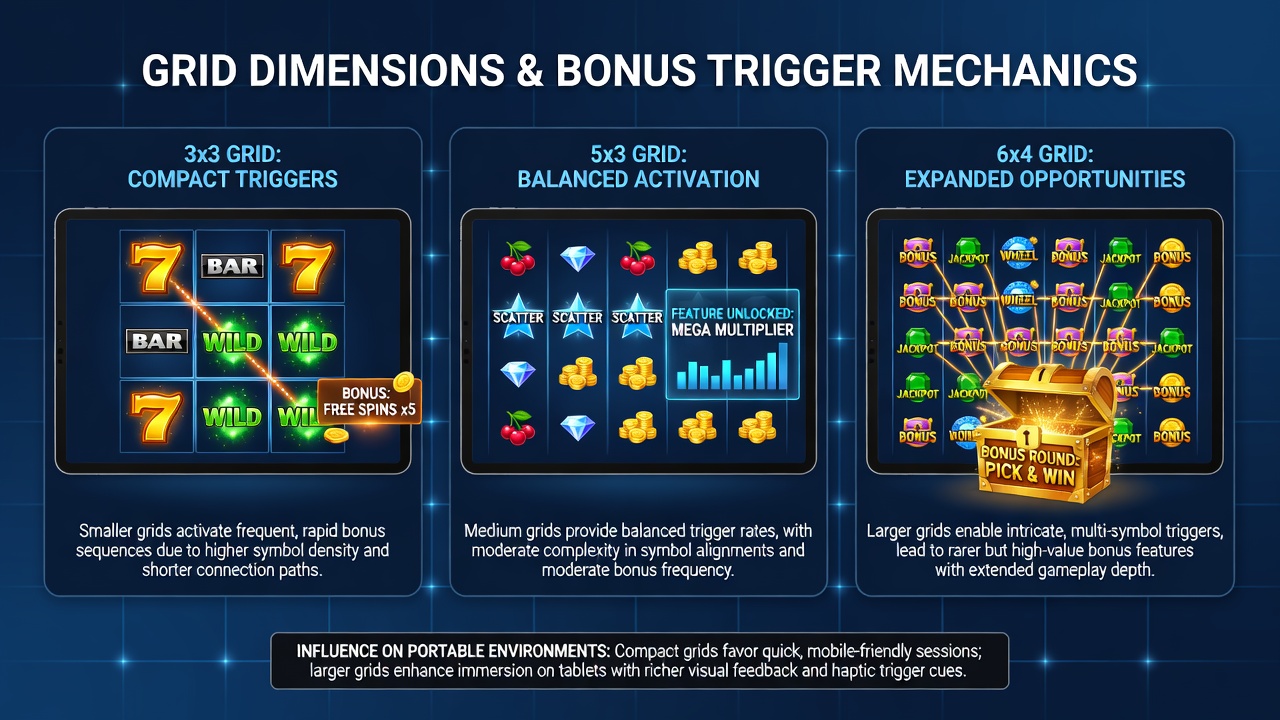
Grid dimensions in free slot environments determine how often bonus features activate because reel height, width and symbol distribution directly control the number of possible outcomes per spin. Researchers tracking mobile platforms observe that compact 3-reel grids generate fewer total combinations than five-reel or six-reel layouts, which alters the statistical window for scatter symbols or bonus icons to land in required patterns.
Basic Mechanics Behind Grid Configurations
Portable free slot titles rely on random number generators that map outcomes across fixed reel positions, so a 3x3 grid contains 27 cells while a 5x5 grid expands that space to 125 cells, and developers adjust symbol frequencies to maintain target return-to-player percentages. Data from regulatory testing labs shows that larger grids increase the raw number of ways to trigger features such as free spins or pick-and-win rounds, yet the probability per individual spin remains calibrated through symbol weighting rather than grid size alone.
Engineers program mobile clients to render these grids responsively, and the same underlying RNG sequence produces different visual results depending on whether the interface displays three rows or five rows. Observers note that players encounter more frequent near-miss animations on taller reels because additional symbol positions raise the chance that two scatters appear without the third completing the trigger.
How Width and Height Alter Feature Timing
Five-reel grids with four rows each create 20 positions per reel, allowing developers to place bonus symbols across more vertical space and thereby raise the hit rate for multi-scatter triggers without changing the overall RTP. In contrast, classic three-reel titles often reserve bonus activation for specific payline alignments, which limits feature entry points to a smaller subset of the 27 total cells. Studies conducted by independent testing facilities indicate that expanding grids, where rows increase during base play, shift the distribution of outcomes mid-session and can accelerate bonus triggers once additional rows unlock extra symbol positions.
July 2026 reports from North American gaming laboratories documented a measurable uptick in titles using 6x4 or 7x5 configurations on smartphone platforms, with average bonus trigger intervals shortening by 12 to 18 spins compared with standard 5x3 layouts. Those figures emerge because the added cells accommodate higher densities of low-value symbols while preserving the same weighted probability for premium bonus icons.
Symbol Distribution Across Different Reel Counts
Developers allocate symbol tables according to grid size so that a 3-reel game might place one bonus symbol on each reel for a one-in-twenty-seven trigger chance, whereas a 5-reel game distributes the same symbols across five reels with adjusted frequencies to reach a comparable overall rate. Mobile interfaces display these reels in vertical strips that scroll independently, and the rendering engine handles variable reel heights without altering the underlying random sequence. Research papers from European gaming analytics groups reveal that games with dynamic reel heights during bonus rounds achieve higher feature retention rates because players remain engaged longer once the grid expands and new symbol combinations become available.
Cluster-pay systems, which replace traditional paylines with adjacent symbol groups, further complicate the relationship between grid size and bonus triggers because larger rectangular areas increase the number of possible clusters. Regulators in multiple jurisdictions require that any change to grid geometry undergo fresh mathematical verification to confirm that published return percentages remain accurate after the layout modification.
Impact on Mobile Performance and Player Sessions
Smartphone processors handle larger grids by pre-loading symbol assets and using lightweight animation routines, yet the increased number of cells demands slightly more memory during extended play sessions. Industry reports compiled by the Gaming Laboratories International confirm that optimized mobile clients maintain consistent frame rates across 3-reel and 6-reel titles when the underlying RNG calculations stay identical. Session-length data collected from operator dashboards shows that titles with moderate grid sizes between 4x4 and 5x4 sustain longer average play durations in no-deposit environments because bonus features appear at intervals that feel neither too sparse nor overly frequent.
Those who analyze telemetry from free-to-play platforms note that grid expansions triggered by consecutive wins create a feedback loop where each successful spin raises the probability of the next bonus activation until the feature round begins. This mechanic appears more often in five-reel or greater layouts because the additional rows provide room for progressive multipliers or accumulating symbols without crowding the visible play area.
Regulatory Oversight of Grid-Based Probability Models
Testing standards established by authorities such as the Nevada Gaming Control Board require that every grid dimension receive separate certification, ensuring that bonus trigger rates match the published game rules regardless of screen size. Developers submit detailed probability tables that list every possible outcome for each reel configuration, and independent labs verify these tables before the title reaches mobile distribution channels. Updates released in mid-2026 emphasized stricter documentation for games that alter grid height dynamically, because such changes can shift the effective number of symbol positions mid-session and therefore affect feature frequency calculations.
Conclusion
Grid dimensions exert measurable influence over bonus feature timing in portable free slot environments through the sheer number of cells available for symbol placement and the calibrated weighting applied to each position. Larger or expanding layouts increase the statistical opportunities for scatter combinations while requiring corresponding adjustments to symbol tables that preserve target return percentages. Regulatory bodies continue to verify these configurations through independent testing, and mobile platforms deliver consistent performance across varying reel sizes when developers optimize rendering pipelines accordingly. The relationship between grid geometry and feature activation remains a core consideration in the design of new no-deposit titles released throughout 2026.