Synchronization of Free Play Credits With Jackpot Pools in Smartphone Gaming

Smartphone-based gaming platforms have developed intricate systems that link free play credits directly to jackpot pools, allowing contributions from bonus rounds to influence progressive prize growth. These mechanisms rely on backend algorithms that track credit usage across sessions while maintaining eligibility rules for larger payouts. Observers note that such synchronization became more refined during platform updates rolled out in early 2026, with mobile operators adjusting contribution rates to balance player engagement and pool accumulation.
Core Mechanics of Free Play Credits in Mobile Environments
Free play credits function as temporary balances awarded through promotions or loyalty programs, yet their integration with jackpot systems requires precise tracking of each credit's origin and application. When users activate these credits on progressive slots, a portion of the wagered amount feeds into the shared pool according to predefined percentages set by the game provider. Research indicates that this process occurs in real time through server-side calls that update pool values across connected devices without interrupting gameplay flow.
Developers implement strict parameters so that free play credits contribute at reduced rates compared to real-money wagers, typically ranging from 10 to 50 percent depending on the jurisdiction and operator agreement. This tiered approach prevents rapid pool inflation while still allowing bonus play to participate in jackpot eligibility. Those who study mobile gaming infrastructure point out that synchronization protocols also verify device location and account status before crediting any pool increments, which maintains compliance across state lines.
Progressive Jackpot Pool Structure and Contribution Logic
Jackpot pools in smartphone gaming operate as aggregated reserves built from fractions of every qualifying bet, with mobile platforms often linking multiple games into shared progressives that span thousands of concurrent users. Synchronization enters here through data pipelines that map free play activity to the same pool ledgers used for cash wagers, ensuring no double-counting occurs. Figures from industry monitoring services reveal that major mobile networks processed over 2.4 billion micro-transactions daily in March 2026, many tied to these hybrid contribution models.
Seed amounts and increment rates stay fixed within each game's configuration files, while synchronization layers handle dynamic adjustments when free play credits enter the equation. For instance, if a player triggers a bonus round using promotional credits, the system prorates the contribution based on the credit source code embedded in the transaction record. Experts have observed that this prevents artificial spikes in pool growth and keeps mathematical return-to-player percentages stable across both paid and bonus play.
Technical Integration Across Smartphone Platforms
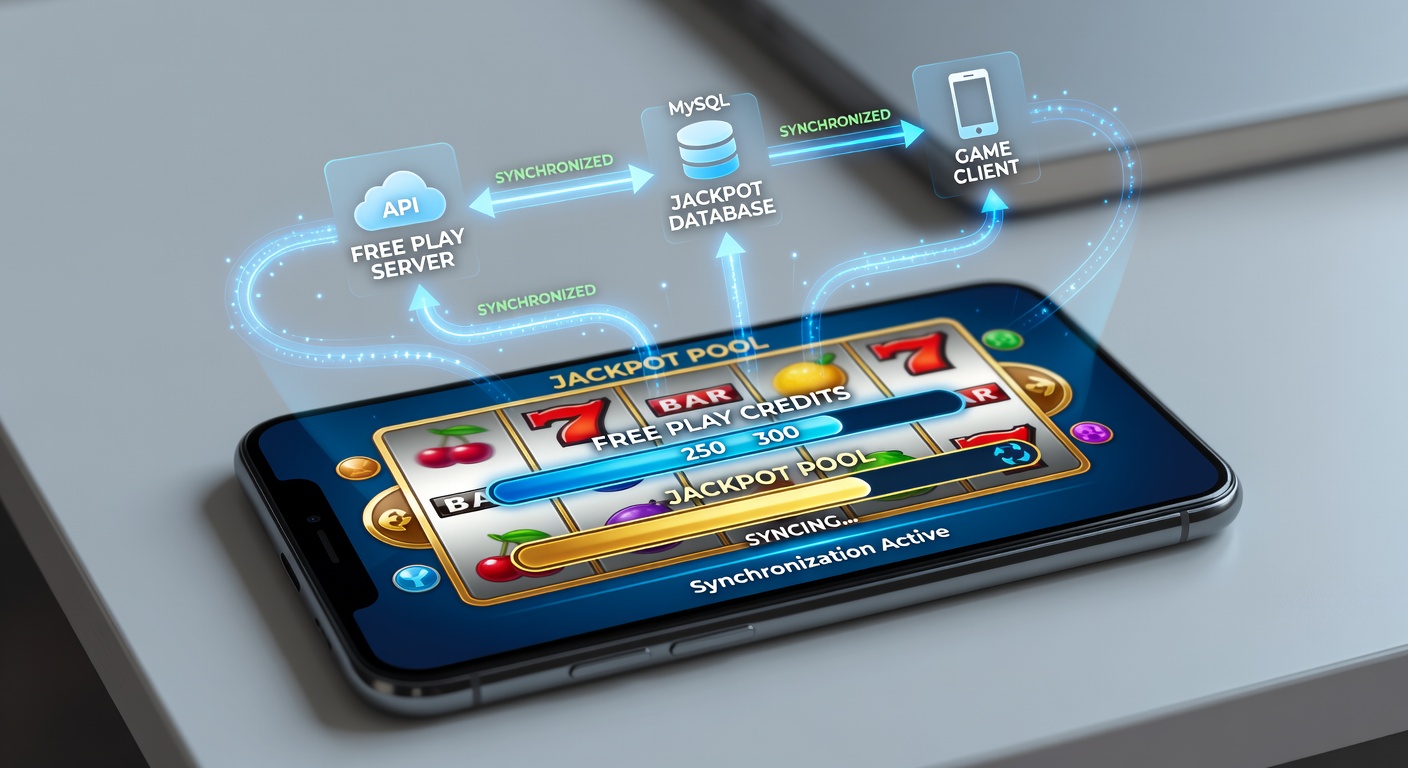
Cross-device consistency demands that synchronization engines reconcile free play balances with jackpot ledgers even when users switch between iOS and Android applications or resume sessions after interruptions. Cloud-based servers store session tokens that carry contribution history, allowing seamless updates when a player returns to the same progressive title. Data from network analytics firms shows that latency in these updates averaged under 120 milliseconds during peak hours in June 2026, supporting uninterrupted mobile experiences.
Encryption standards and audit trails accompany every credit-to-pool transfer, giving regulators visibility into how promotional funds interact with prize structures. Operators must log source identifiers for each free play instance so that compliance reports distinguish between real-money and bonus-driven contributions. Those who've examined platform architectures note that middleware solutions often bridge game clients with central jackpot controllers, handling currency conversions and regional rule sets simultaneously.
Regulatory Considerations in Multiple Jurisdictions
Regulatory bodies across regions impose varying requirements on how free play credits may feed into jackpot pools, with some markets mandating separate reporting streams for bonus activity. Gaming Standards Association documentation outlines common technical specifications that platforms adopt to meet these demands while preserving synchronization integrity. In Canada, provincial oversight bodies review contribution formulas annually to confirm that promotional play does not disproportionately affect prize distribution.
European operators follow similar transparency rules under directives that emphasize fair allocation between paid and bonus wagers. Synchronization software therefore includes configurable flags that adjust contribution weights according to the player's registered jurisdiction, preventing cross-border compliance conflicts. Reports compiled by academic researchers at institutions studying digital gaming economics highlight that these adaptive systems reduced audit discrepancies by approximately 18 percent between 2024 and 2026.
Future Developments and Platform Evolution
Emerging updates scheduled for late 2026 aim to introduce real-time visibility tools that let players view how their free play activity currently influences jackpot meters. These features rely on enhanced synchronization protocols capable of handling increased data volume from expanded 5G networks. Industry organizations continue to refine interoperability standards so that third-party game studios can integrate their titles into existing pool frameworks without custom recoding.
Testing environments simulate high-volume free play scenarios to verify that pool calculations remain accurate under sustained load. Observers tracking mobile gaming trends report that operators testing these enhancements achieved consistent pool growth rates even when bonus credit volume doubled during promotional events.
Conclusion
The synchronization of free play credits with jackpot pools represents a technical achievement that balances promotional incentives against prize pool stability in smartphone gaming. Through layered contribution rules, real-time data reconciliation, and jurisdiction-specific adjustments, platforms maintain fairness while supporting player participation. Continued refinements scheduled through 2026 indicate ongoing investment in these systems to accommodate rising mobile traffic and evolving regulatory expectations.